

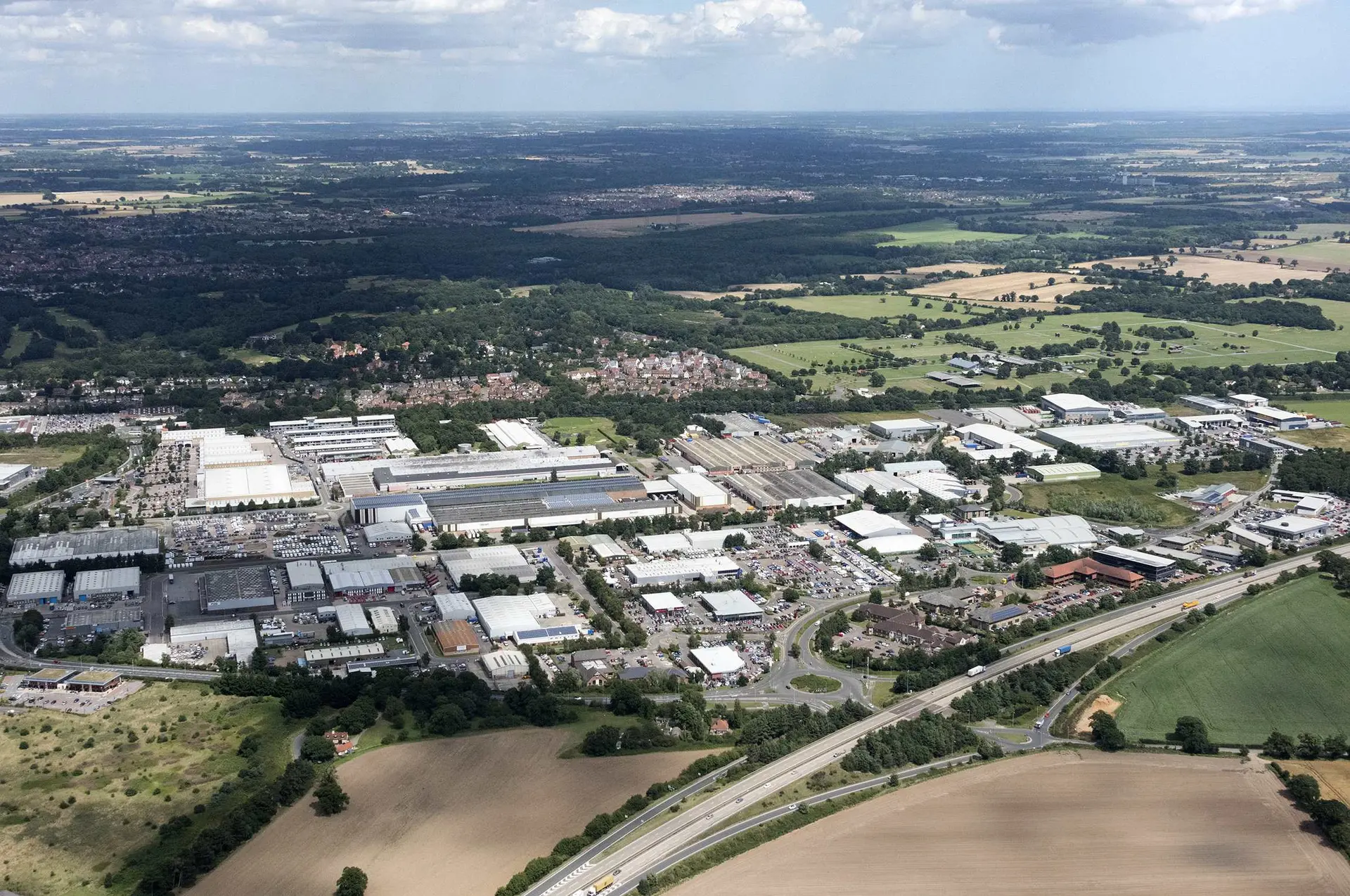
Four Operating Modes, One Closed-Loop System
Closed-loop service, OMO online-offline integration, reverse invoicing for compliant settlement, and park and regional coordination — four modes together form the operating framework through which Molyfor serves waste generators, industrial parks and regulators.
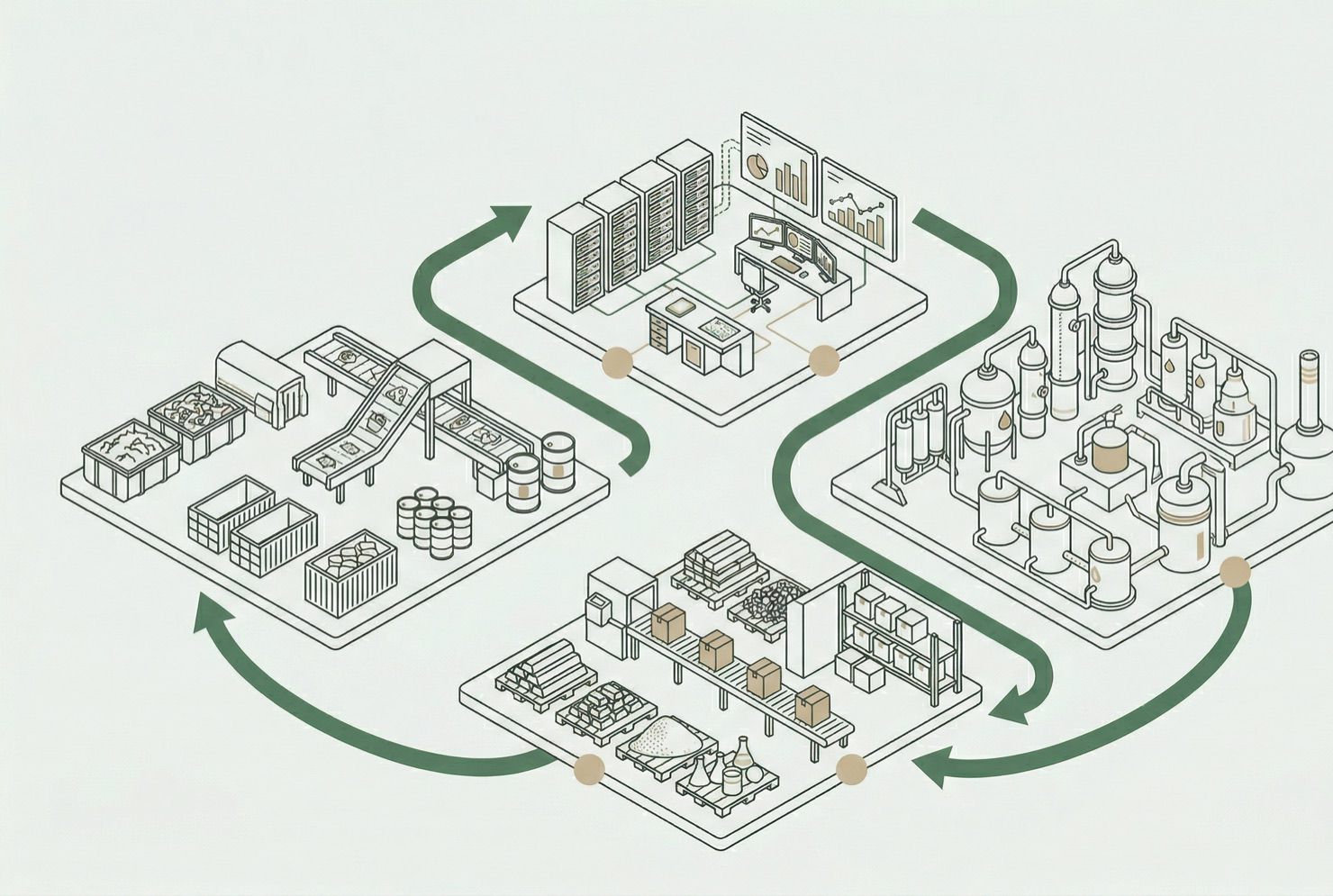
The Closed-Loop Service System.
The full journey of waste from generation to regeneration is organized as a closed-loop recycling system in which logistics, information and funds run as three flows in one. Each step is backed by a corresponding set of compliance measures, equipment and platform support.
The aim of the three flows in one is to keep settlement and supervision from being scattered across separate systems — waste generators, government regulators and buyers of regenerated products make decisions on the same layer of facts, while electronic manifests and ledgers turn every delivery and every settlement into an auditable record of responsibility.
Six Standard Service Links.
Information Intake
Waste declaration, category verification and service plan confirmation, with records established on the IoT platform.
Contract Signing
Service scope, measurement basis and settlement terms are fixed by contract and remain traceable throughout.
On-Site Collection
Pickups are scheduled to each generator’s production rhythm; professional vehicles and crews complete sorting and standardized packaging on site.
Compliant Transfer
Waste is carried by vehicles licensed for dangerous goods transport, with electronic manifests and GPS tracks recorded throughout.
Disposal and Utilization
Waste enters storage, incineration, physical-chemical treatment or resource regeneration units by category, improving resource recovery rates.
Follow-Up Tracking
Ledgers are archived and service follow-ups conducted; disposal certificates are shared with waste generators as required by regulators.
Logistics, Information and Funds, Three Flows in One.
Logistics
The physical movement of hazardous waste, general industrial solid waste and biomass waste from the point of generation to the point of disposal.
Information
Real-time data from smart terminals, RFID tags and smart weighing equipment flows into the regulatory platform, forming a queryable layer of facts.
Funds
Fund clearing and settlement paths synchronized with logistics, supporting online payment and reverse invoicing.

Integrated Online-Offline Service.
In traditional hazardous waste management, online declaration and offline operations are disconnected: the declaration system does not know where the vehicles are, dispatchers do not know the generators’ production rhythm, and the data reaching regulators lags behind actual operations.
The OMO model deeply fuses the IoT platform with the offline collection and storage network — one online declaration, one on-site visit and end-to-end traceability become the standard operating procedure. For one-stop collection and storage across categories, from high-value waste mineral oil to low-value spent activated carbon, the OMO model is the precondition for replication at scale.
Three Enabling Conditions.
Platform First
The "IoT + Hazardous Waste" Intelligent Management Service Platform (IHWDS) and its smart hardware are in operation, with 268 IoT terminals online covering generation, collection and transport, disposal and regeneration.
Service Network
Anchored offline by the Phase I Yi’an project — commissioned in 2023 and in stable operation for two years — the network has served a cumulative 6,000+ waste-generating enterprises across all 16 prefecture-level cities of Anhui.
One-Stop Collection and Storage
One point of contact and door-to-door collection covering the main categories from waste mineral oil to spent activated carbon and used packaging containers; online declaration, offline operations and end-to-end traceability are completed within a single standard workflow.

Reverse Invoicing and Four Flows in One.
In the recycled resources industry, front-line collectors are mostly natural persons and very small businesses, and the sector has long struggled to obtain invoices and settle payments compliantly; downstream disposal enterprises cannot obtain compliant input vouchers, and the invoice cycle breaks down.
Drawing on the reverse invoicing policy for resource recovery enterprises implemented by the State Taxation Administration in 2024, and working with partner banks’ fund supervision systems, Molyfor embeds the invoice flow into the fund settlement process of the IoT platform — as a resource recovery enterprise, Molyfor issues reverse invoices to natural-person sellers and obtains compliant VAT input vouchers in accordance with the policy, sellers benefit from small-scale taxpayer preferences, and logistics, funds, invoices and data run as four flows in one.
Backed by Policy, Banking and Invoicing.
Policy Basis
Since 2024, resource recovery enterprises have been able to issue reverse invoices to sellers under national policy; Molyfor is among the enterprises putting the policy into engineering practice.
Bank Fund Supervision
Fund flows are supervised jointly with partner banks, so every settlement is backed by an auditable bank record.
Compliant Input Vouchers
As the recycling end, Molyfor obtains compliant VAT input vouchers in accordance with the policy; front-line collection no longer relies on undocumented transactions, and tax compliance costs across the whole chain are significantly reduced.
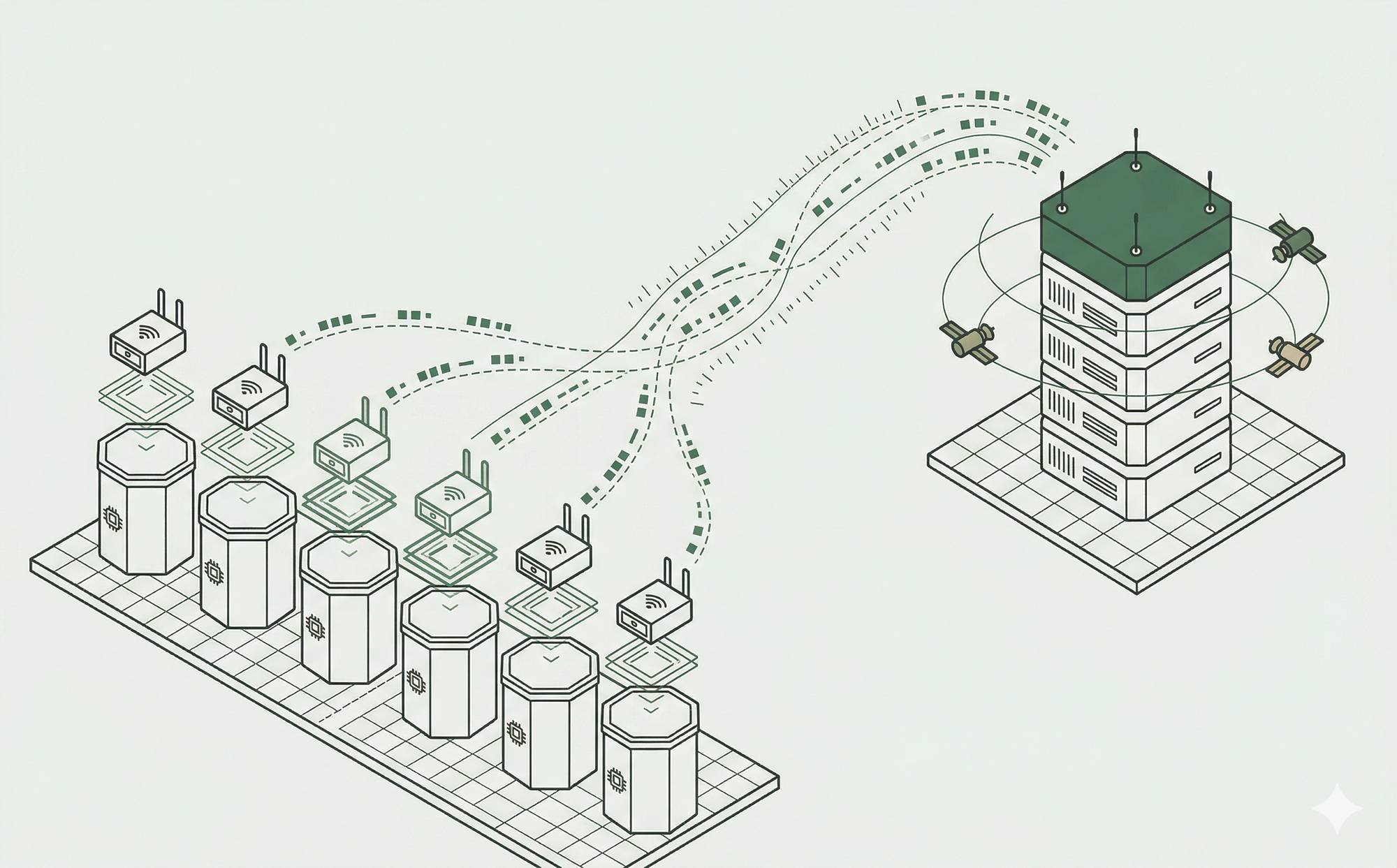
Park and Regional Coordinated Disposal.
A single enterprise’s compliance loop can be handled by the closed-loop service and reverse invoicing modes; what parks and regulators face is a regional coordination problem — dozens of waste generators, multiple logistics channels and one regulatory standard.
The regional coordination mode opens Molyfor’s hardware and platform to park administrations and local regulators: waste intake points share the same single-code traceability tags, the park dispatch center tracks collection vehicles in real time, and the regulatory platform connects to electronic manifests and disposal ledgers — service capacity grows from a single project into regional infrastructure.
A Three-tier Regional Framework.
Single-Code Traceability
RFID standardized packaging is connected with the IoT platform, and full life-cycle waste data is shared across the region.
Regulatory Integration
Interfaces connect with environmental regulatory platforms and with tax, transport and financial systems, with manifests and ledgers reported in real time.
Emergency Coordination
Three-tier coordination links on-site alerts, park dispatch and regulator notifications, keeping the full risk-handling process on record.
Discuss Hazardous Waste Disposal and Operations Cooperation.
Waste generators, park administrations and regulatory agencies can engage the mode that fits their needs; Molyfor provides full support from solution design to on-the-ground operation.