

Core Advantages
Three advantages that answer the core concerns of waste generators and industrial parks: compliance and traceability, collection efficiency, and integration with regulators.
One-Stop Closed Loop, Fully Traceable.
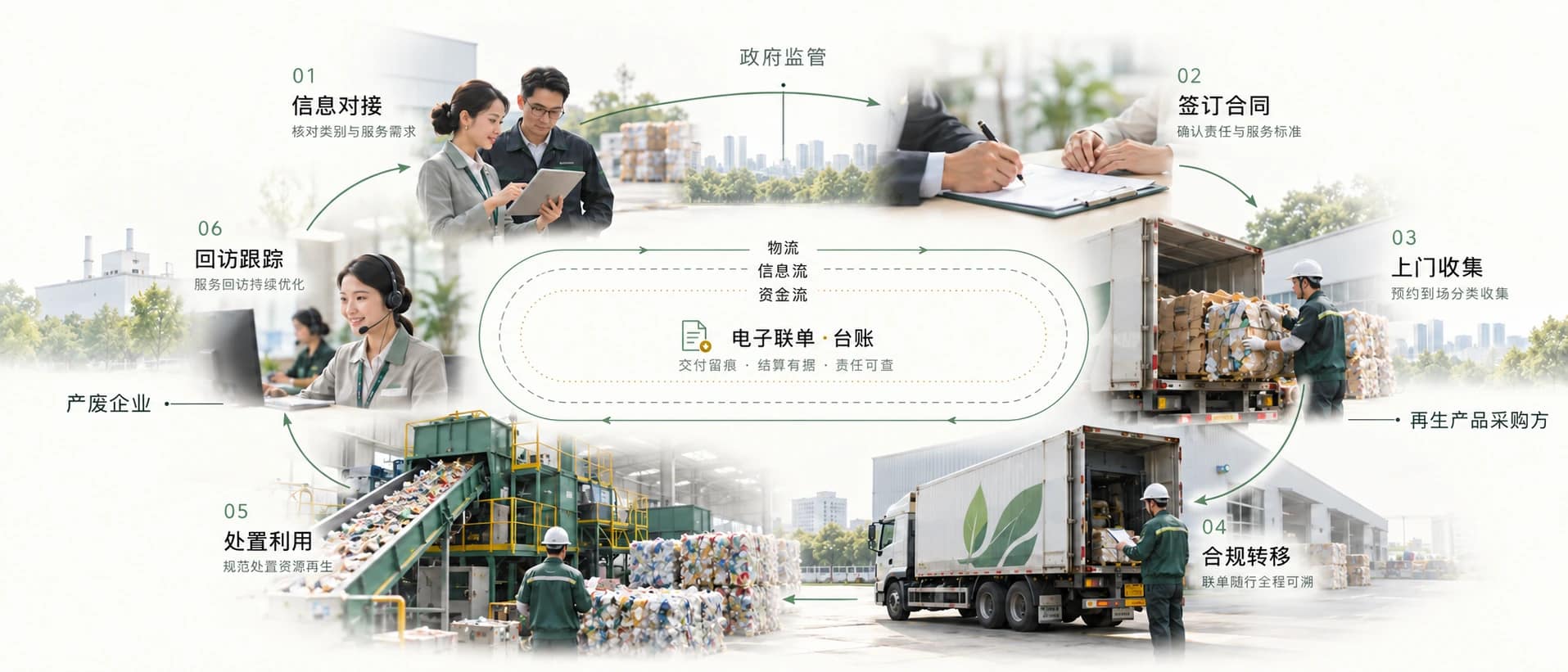
Closed-loop service system diagram
From information intake and contract signing to on-site collection, compliant transfer, disposal and utilization, and follow-up tracking, Molyfor organizes all six steps end to end. For now, waste is collected and stored at the Yi’an Project, then transferred to licensed facilities for utilization and disposal; the Zongyang Project is under construction and, once commissioned in 2027, will treat and utilize waste in its own units. Waste generators deal with a single contact: waste mineral oil, spent activated carbon, used packaging and other categories leave on the same collection truck, with no need to coordinate collection, disposal and settlement separately.
Every transfer carries an electronic transfer manifest, every delivery has weighing records and ledger entries, and disposal certificates are returned to waste generators as required. Settlement is equally compliant: corporate clients settle under contract with complete invoices, and when purchasing end-of-life products from eligible individual sellers, Molyfor issues reverse invoices under State Taxation Administration Announcement No. 5 of 2024, creating a compliant record.
Six Standard Service Links.
Information Intake
Waste declaration, category verification and service plan confirmation, with records established on the IoT platform.
Contract Signing
Service scope, measurement basis and settlement terms are fixed by contract and remain traceable throughout.
On-Site Collection
Pickups are scheduled to each generator’s production rhythm; professional vehicles and crews complete sorting and standardized packaging on site.
Compliant Transfer
Waste is carried by vehicles licensed for dangerous goods transport, with electronic manifests and GPS tracks recorded throughout.
Disposal and Utilization
For now, waste is stored and then transferred to licensed facilities for disposal; once the Zongyang Project is commissioned, it will enter incineration, physicochemical treatment or regeneration units by category.
Follow-Up Tracking
Ledgers are archived and service follow-ups conducted; disposal certificates are returned to waste generators as required.
Logistics, Information and Funds, Three Flows in One.
Waste Location, Always Visible
Transport tracks and weighing records are live, so waste generators can see at any time when a load left, where it is and how much was delivered.
One Record for All Parties
Data from smart terminals, RFID tags and smart weighing flows into one platform, so waste generators, the park and regulators view the same record.
Weight-Based Settlement, Matching Invoices
Settlement follows weighed quantities with online payment supported, and invoices match the logistics record; end-of-life products bought from eligible individual sellers are reverse-invoiced under STA Announcement No. 5 of 2024.
Order Online, Collection by Appointment.
Waste generators declare, order and track online through the "IoT + Hazardous Waste" Intelligent Management Service Platform (IHWDS); offline, vehicles and crews licensed for road transport of dangerous goods collect at the agreed time, and small quantities can be booked too, with no need to wait for a full truckload. Platform data can be aligned with generators' statutory filings, reducing repeated data entry.
Smart terminals, dual-frequency RFID tags and smart weighing turn on-site work directly into data — what was collected, how much, when it was loaded and where it is now — so waste generators and regulators see the same record.
Three Conveniences.
Trackable Online
The IHWDS platform and its smart hardware are in operation, with 268 IoT terminals online covering generation, collection and transport, and storage (disposal and regeneration will connect once the Zongyang Project is commissioned); order progress, electronic transfer manifests and disposal certificates can all be checked online.
Local Pickup
Anchored offline by the Yi’an Project, in stable operation since its commissioning in 2023, the network has served a cumulative 6,000+ waste-generating enterprises across all 16 prefecture-level cities of Anhui, with collection at agreed times.
One Point of Contact
One contact, and waste mineral oil, spent activated carbon, used packaging containers and other categories within the license scope leave on the same collection truck. Shared trucks and scheduling at scale spread transport costs; once the Zongyang Project is commissioned, more revenue will come from downstream regeneration rather than disposal fees, keeping quotes competitive.
Unified Collection and Data Standards Across the Park.
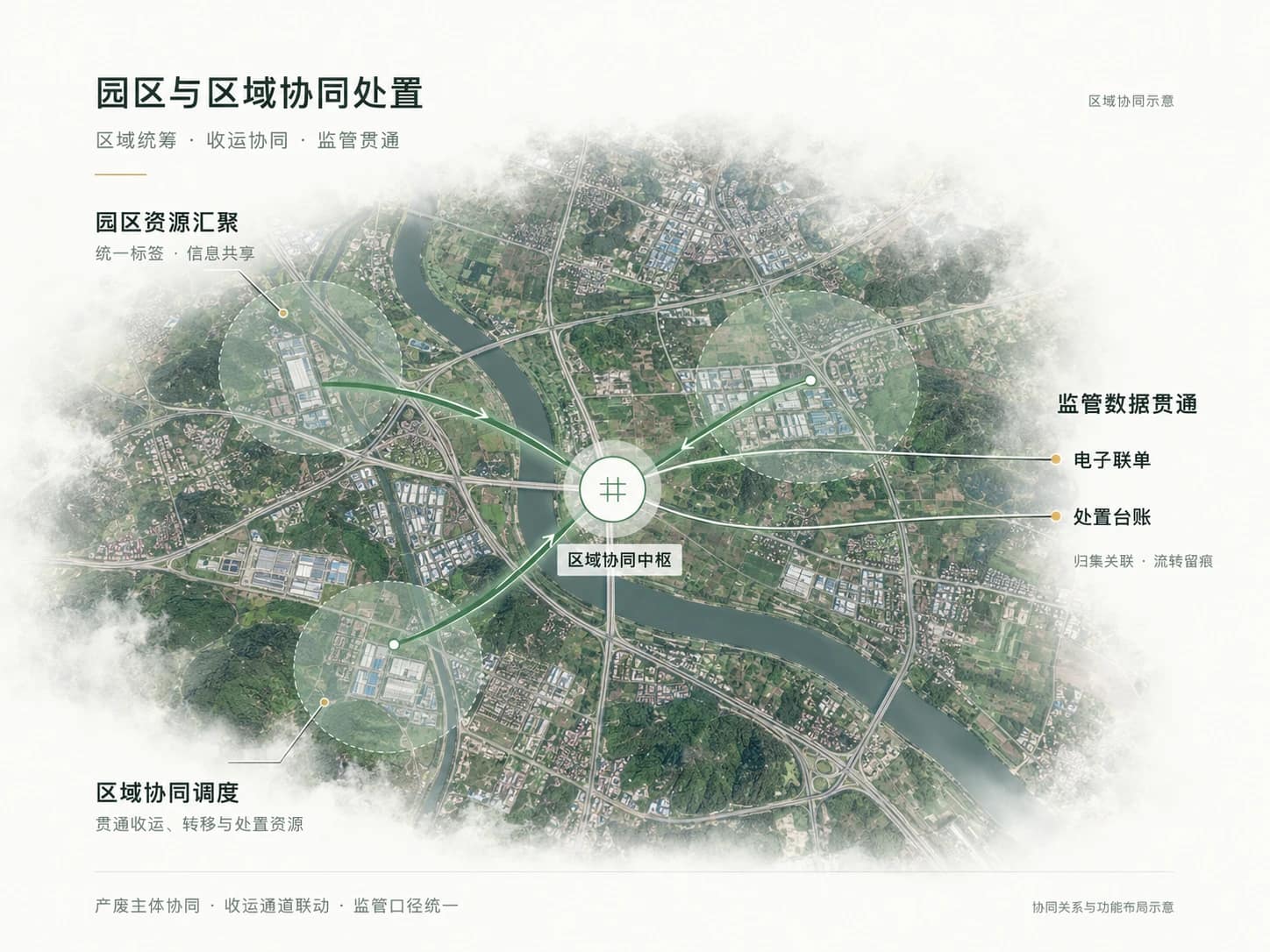
Park and regional coordination diagram
Industrial parks can use Molyfor's tags, dispatch and platform directly: waste generators in the park share the same single-code traceability tags (one code per drum, traceable end to end), the dispatch center tracks collection vehicles in real time, and the regulatory platform connects directly to electronic manifests and disposal ledgers.
Dozens of waste generators and multiple logistics channels follow one set of collection and data standards, so the park and regulators spend less effort on case-by-case checks and repeated reporting.
Three Pillars of Park Coordination.
Single-Code Traceability
One code per drum, traceable end to end: RFID standardized packaging is connected with the IHWDS platform, and full life-cycle data is shared within the scope authorized by waste generators.
Regulatory Integration
Interfaces connect with environmental regulatory platforms and with tax, transport and financial systems, with manifests and ledgers reported in real time.
Emergency Coordination
Three-tier coordination links on-site alerts, park dispatch and regulator notifications, keeping the full risk-handling process on record.
Value for Parks and Governments.
Compliance
Licensed operation, electronic transfer manifests and ledgers on record throughout, and the IHWDS platform connected to regulatory platforms; small and micro waste generators in the park are covered too, shifting oversight from site visits to information-based supervision.
Economic Benefits
Projects bring tax revenue and jobs and support upstream and downstream activity in equipment manufacturing, transport and regenerated products; unified collection lowers the cost of managing waste generator by generator.
Social and Environmental Benefits
Waste is collected nearby and stored centrally, cutting long-distance transport; once the Zongyang Project is commissioned, it can be treated and utilized close by within the province, supporting "Zero-Waste City" development and the dual-carbon goals.
Discuss One-Stop Collection and Storage Services.
Waste generators and industrial park administrations can engage Molyfor according to their own needs, with full support from collection planning to park-level regulatory integration.